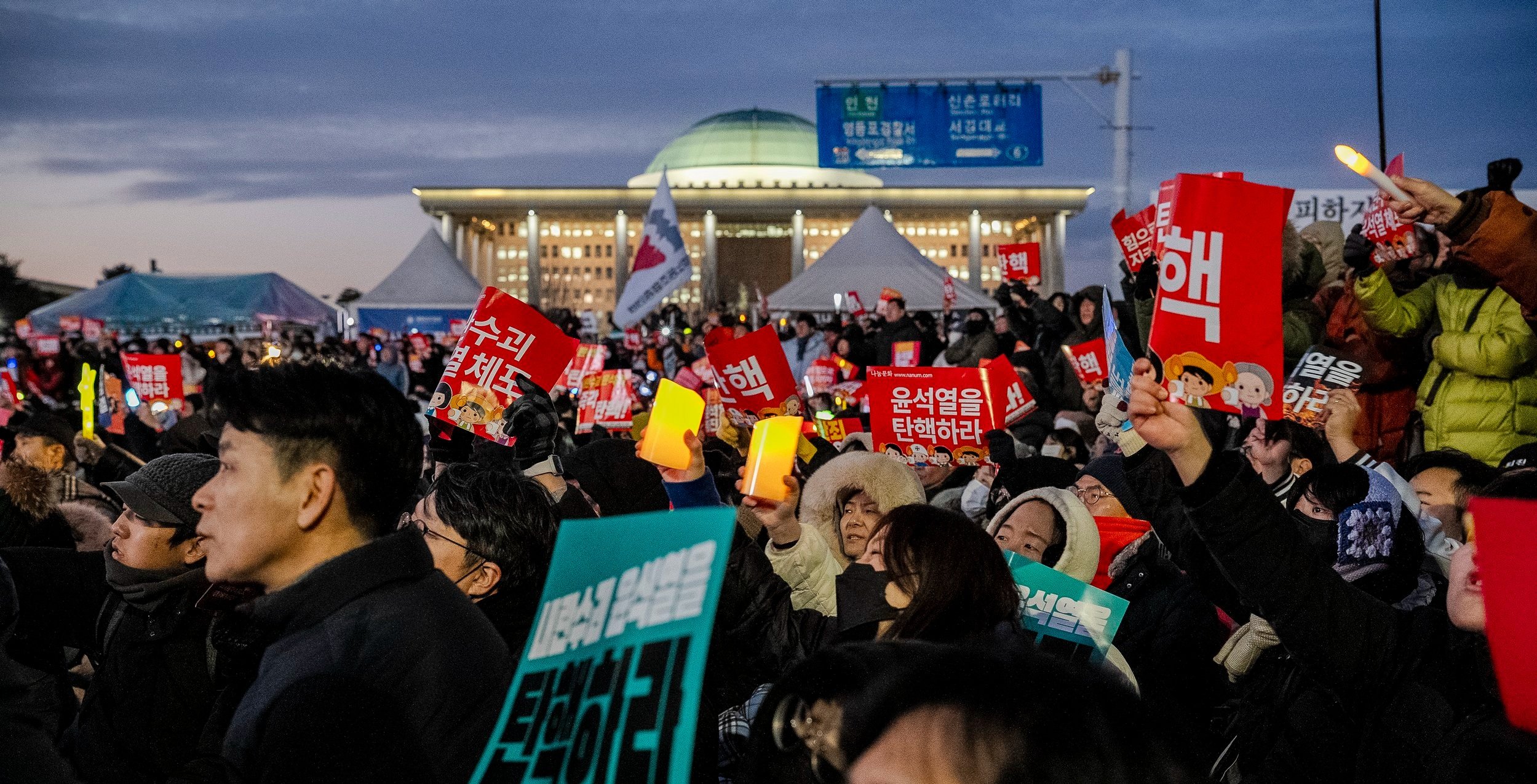
South Korea Martial Law & Journey To The Impeachment of Yoon
Late on the evening of December 3, 2024, President Yoon Suk Yeol declared martial law in South Korea – the first time in over four decades and the first ever under the country’s democratic government. Military troops were dispatched to the National Assembly in an unsuccessful attempt to block lawmakers from entering the chamber and reversing his decree. Within six hours, however, Yoon was forced to lift martial law after a majority in the Assembly – including 18 members of his own conservative People Power Party – voted against it. The move triggered a wave of mass protests. Although Yoon survived an initial impeachment vote on December 4, a second vote on December 14 succeeded, with 204 of the 300 lawmakers backing the motion.
On December 31, 2024, Yoon became the first sitting South Korean president to face an arrest warrant, and on January 15, 2025, he was arrested and charged with leading an insurrection. Meanwhile, the Constitutional Court deliberated on whether to uphold his removal from office. On April 4, 2025, the court issued a unanimous ruling in favor of impeachment, officially removing Yoon from power for attempting to impose martial law just four months earlier.
Amid this political upheaval, thousands of South Koreans took to the streets for months, rallying with candles, placards, music, and K-pop light sticks and enduring the winter cold while calling for Yoon’s removal. In contrast, Yoon’s supporters also grew in number, with younger demographics increasingly visible at counter-rallies. On the night of April 3, crowds camped out near the Constitutional Court, surrounded by a heavy police presence, and erupted in celebration when the verdict was announced the next morning.
This project documents pivotal moments in South Korea’s political landscape - tracing the protests, escalating tensions, and the public’s efforts to defend their democracy.
Some of these photos were made on assignment for The Washington Post, Bloomberg and DER SPIEGEL in December 2024 in Seoul, South Korea. While others were made in my personal capacity while covering the unfolding political unrest.
December 2024 - April 2025
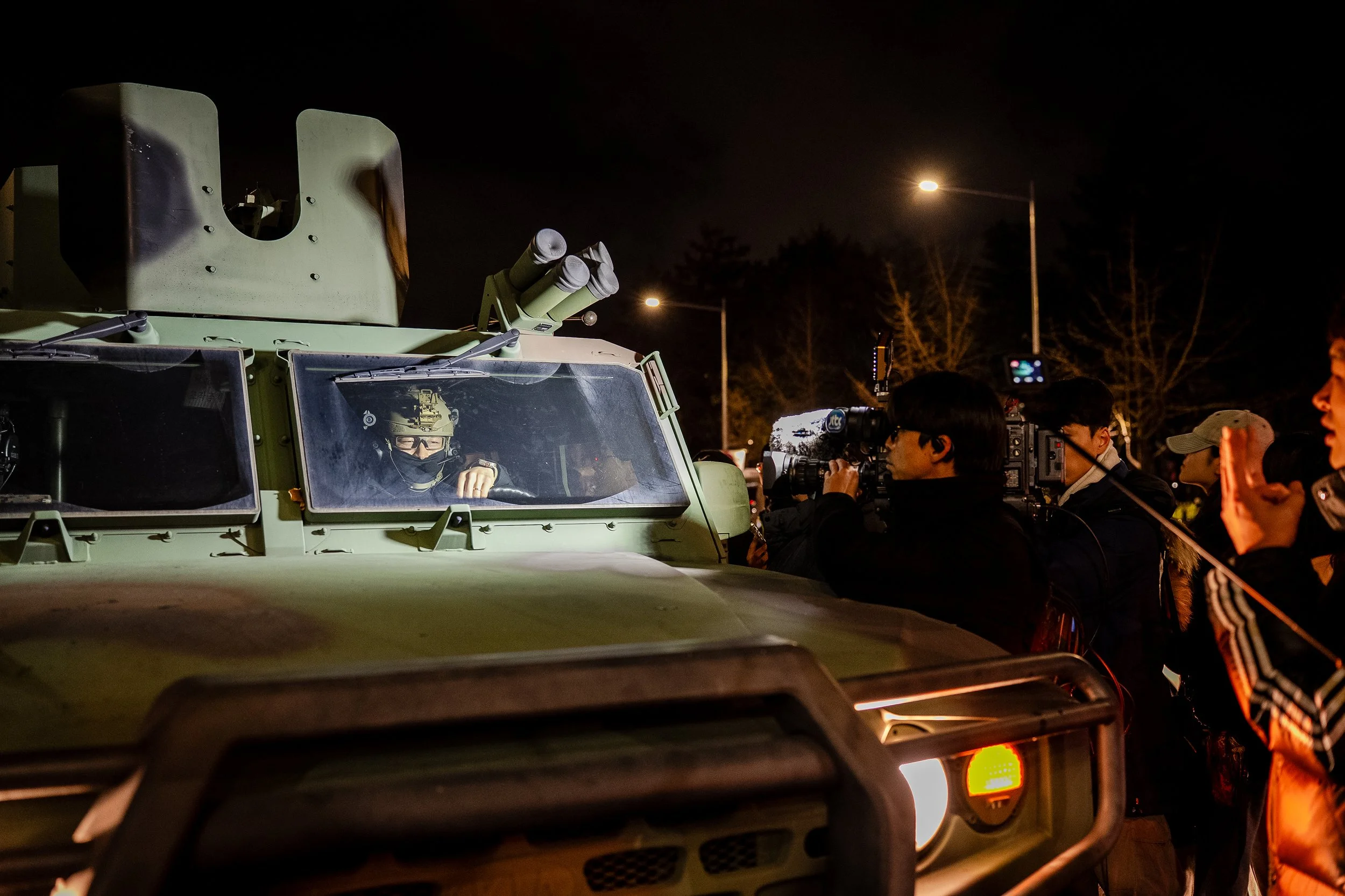
People approach a military vehicle in the streets outside the National Assembly in the early hours of the morning after martial law was declared in South Korea on Dec. 4.
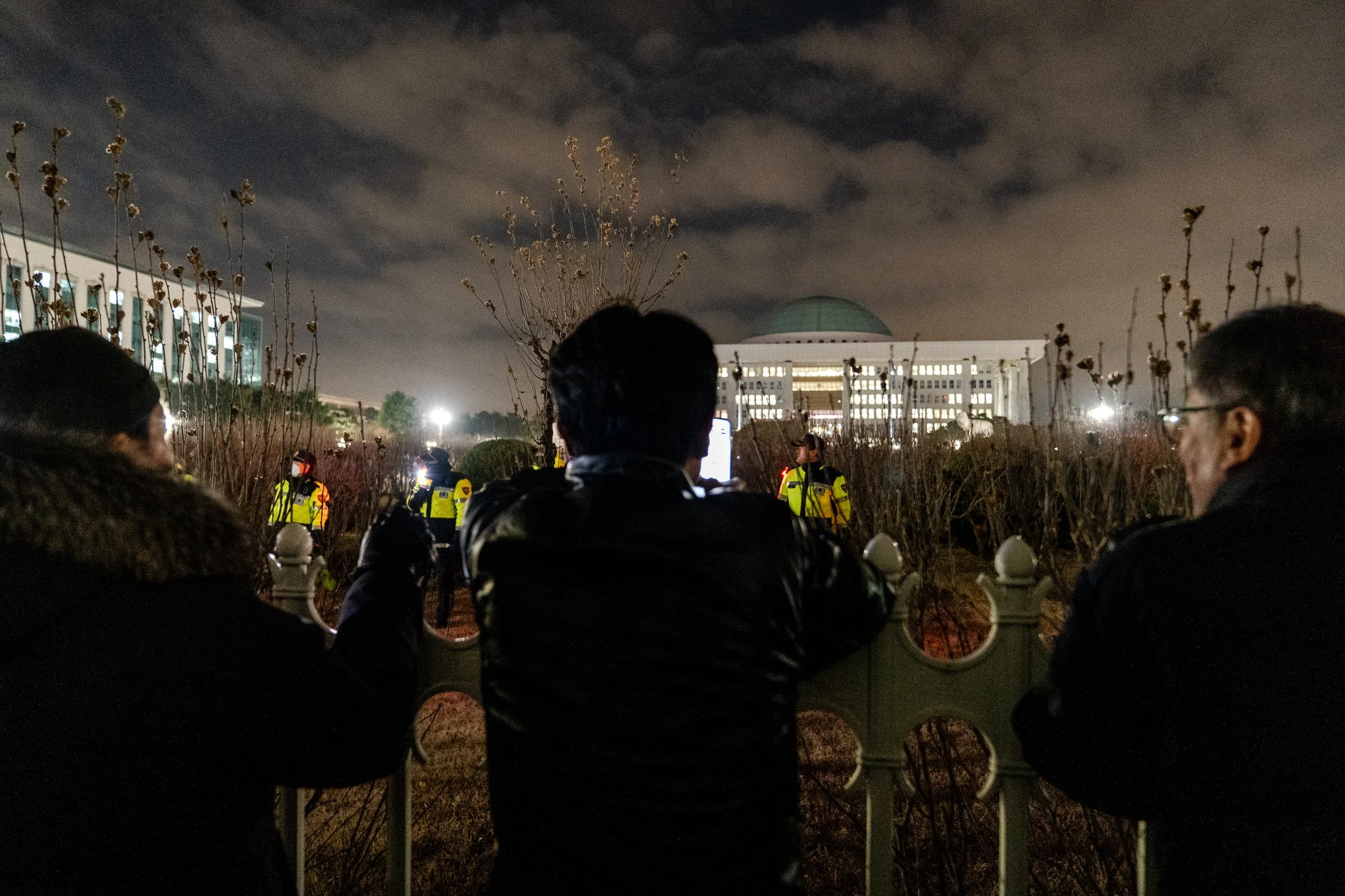
Protesters look over the fence towards the National Assembly as police stand guard in the early hours of the morning after martial law was declared in South Korea on Dec. 4.

A woman reacts after the South Korean National Assembly voted to impeach President Yoon Suk Yeol on Dec. 14.
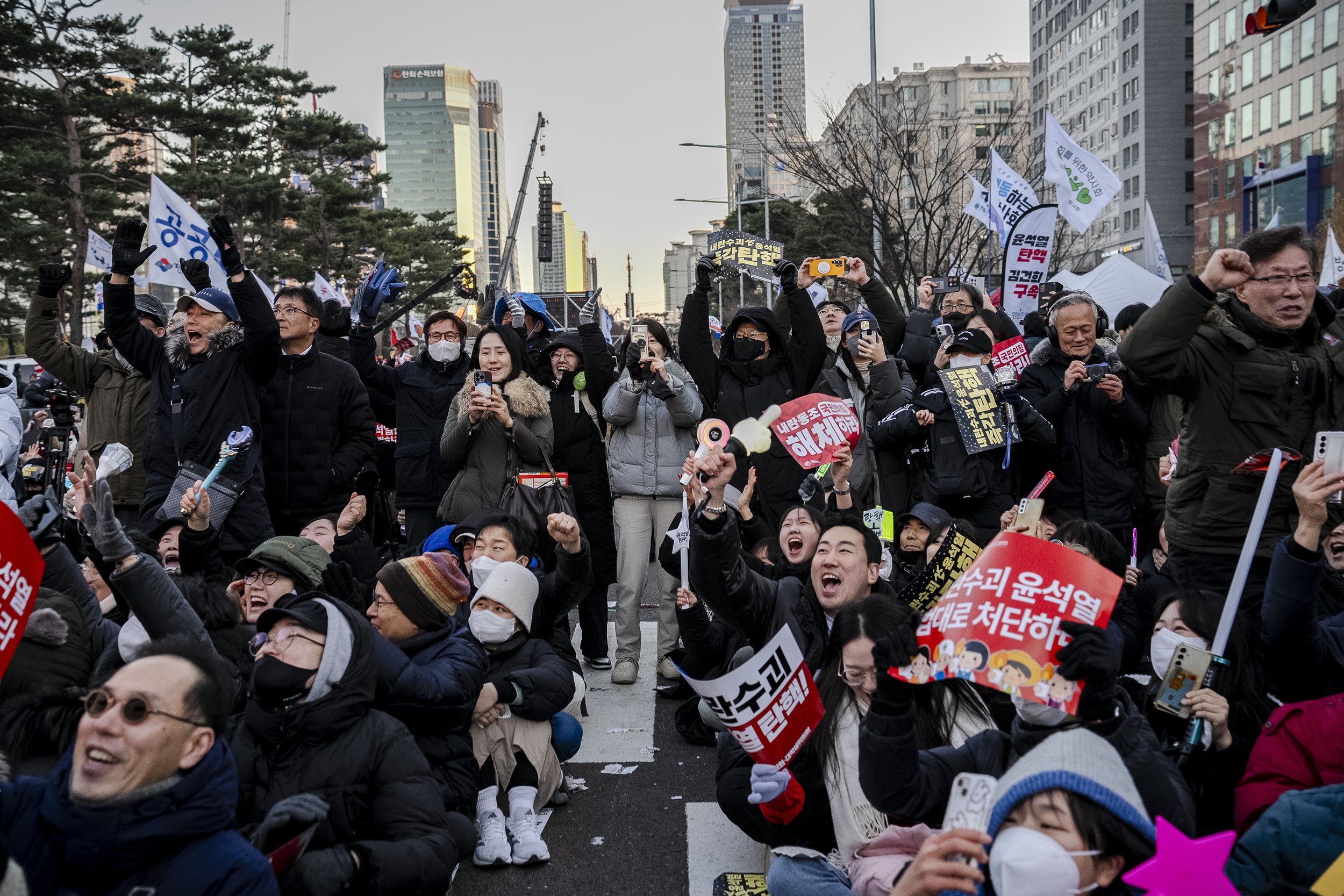
Protesters celebrate after the South Korean National Assembly voted to impeach President Yoon Suk Yeol on Dec. 14.

A man reacts at a protest near The Constitutional Court of Korea as the verdict is read out for Yoon Suk Yeol's impeachment on April 4.
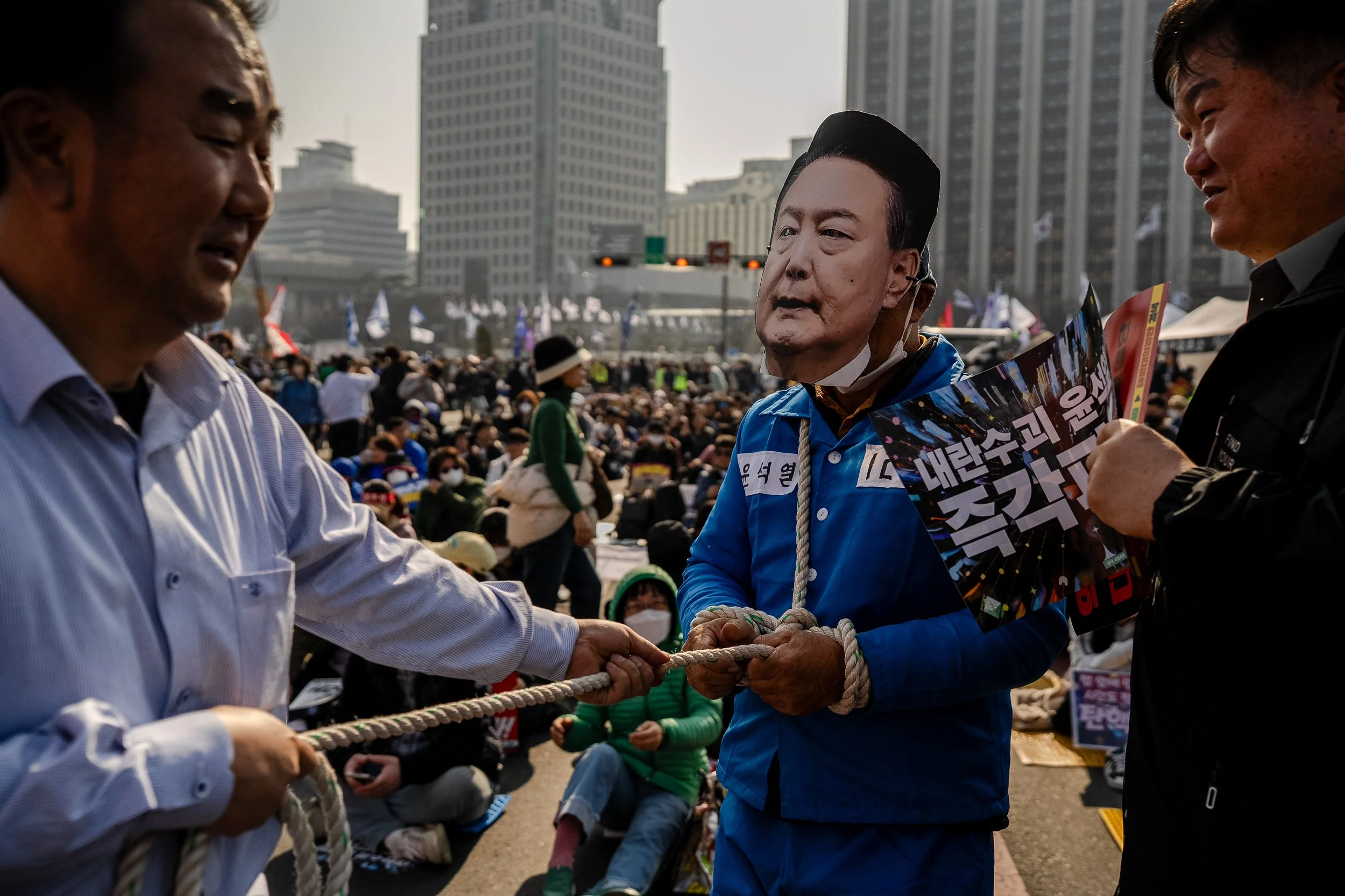
Protesters act out a scene of an imprisoned Yoon Suk Yeol at an anti-Yoon rally on Mar. 22.

People gather in protest in front of the National Assembly against President Yoon Suk Yeol on Dec. 7.

Police officers stand on guard while a Yoon supporter reacts after the Constitutional Court removed Yoon Suk Yeol from power in Seoul on April 4.

People watch a livestream of the voting proceedings during a protest in front of the National Assembly on Dec. 7.

A man watches a livestream of the voting proceedings at a protest in front of the National Assembly against President Yoon Suk Yeol on Dec. 7.

People celebrate at a protest after the Constitutional Court removed Yoon Suk Yeol from power on April 4.
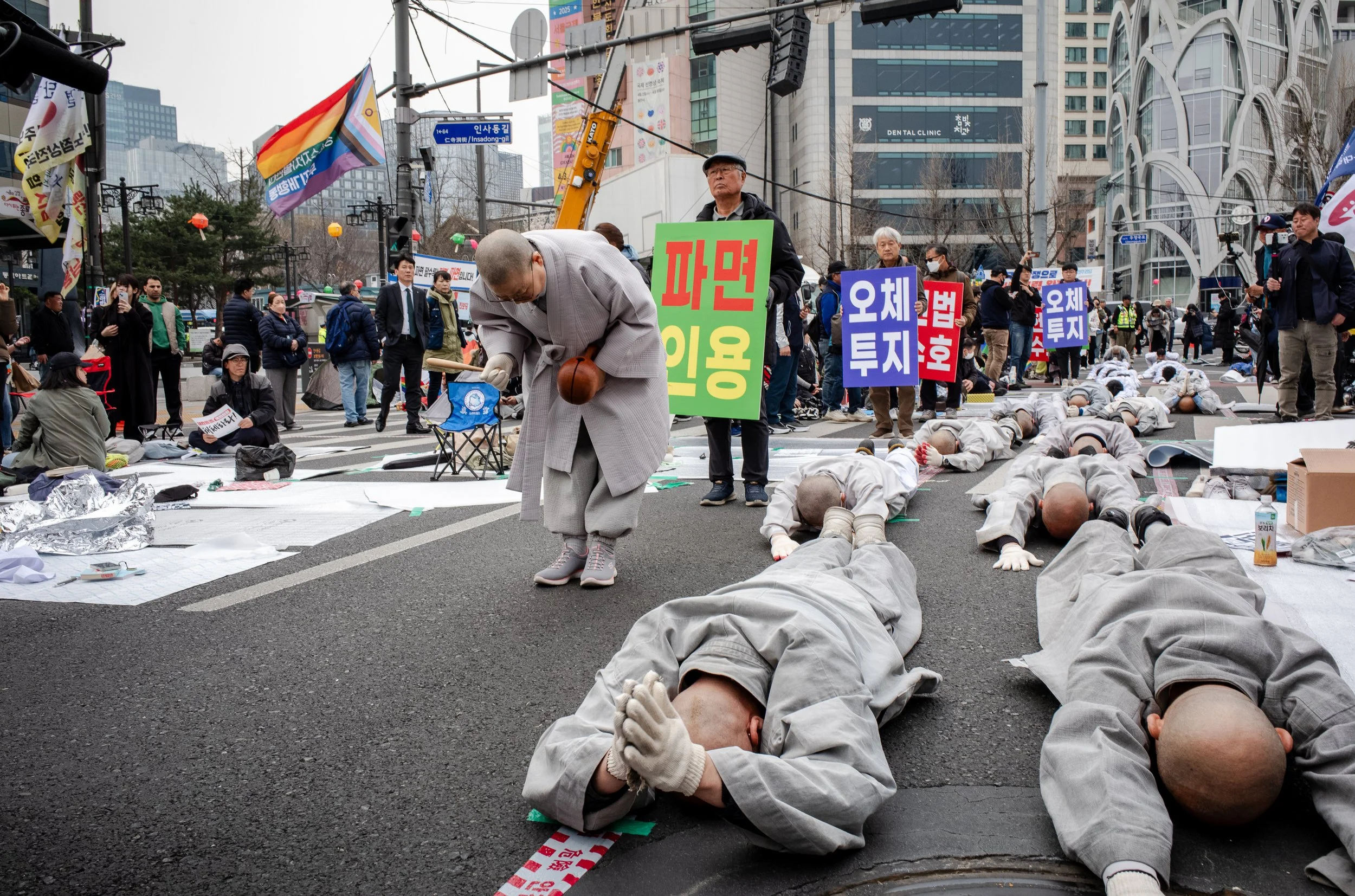
Buddhist monks protest against Yoon Suk Yeol, protrating every five steps from Jogyesa Temple to The Constitutional Court of Korea on April 2.

Pro-Yoon supporters stomp on posters of Lee Jae-myung's face on Mar. 22.

A man prays at a protest near The Constitutional Court of Korea as the verdict is read out for Yoon Suk Yeol's impeachment on April 4.
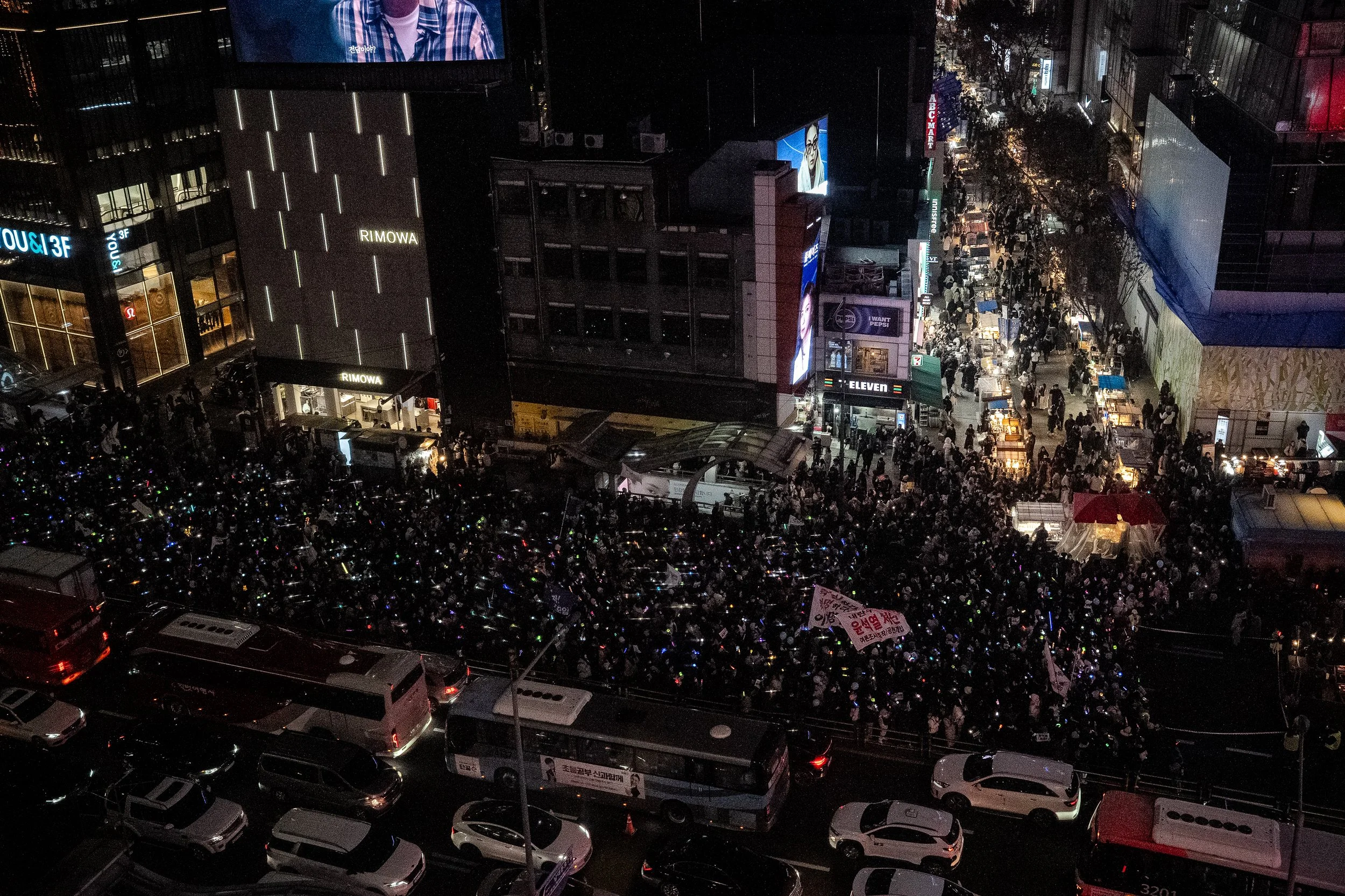
A caravan protest passes by through the streets of Seoul calling for the impeachment of Yoon Suk Yeol on Dec. 21.
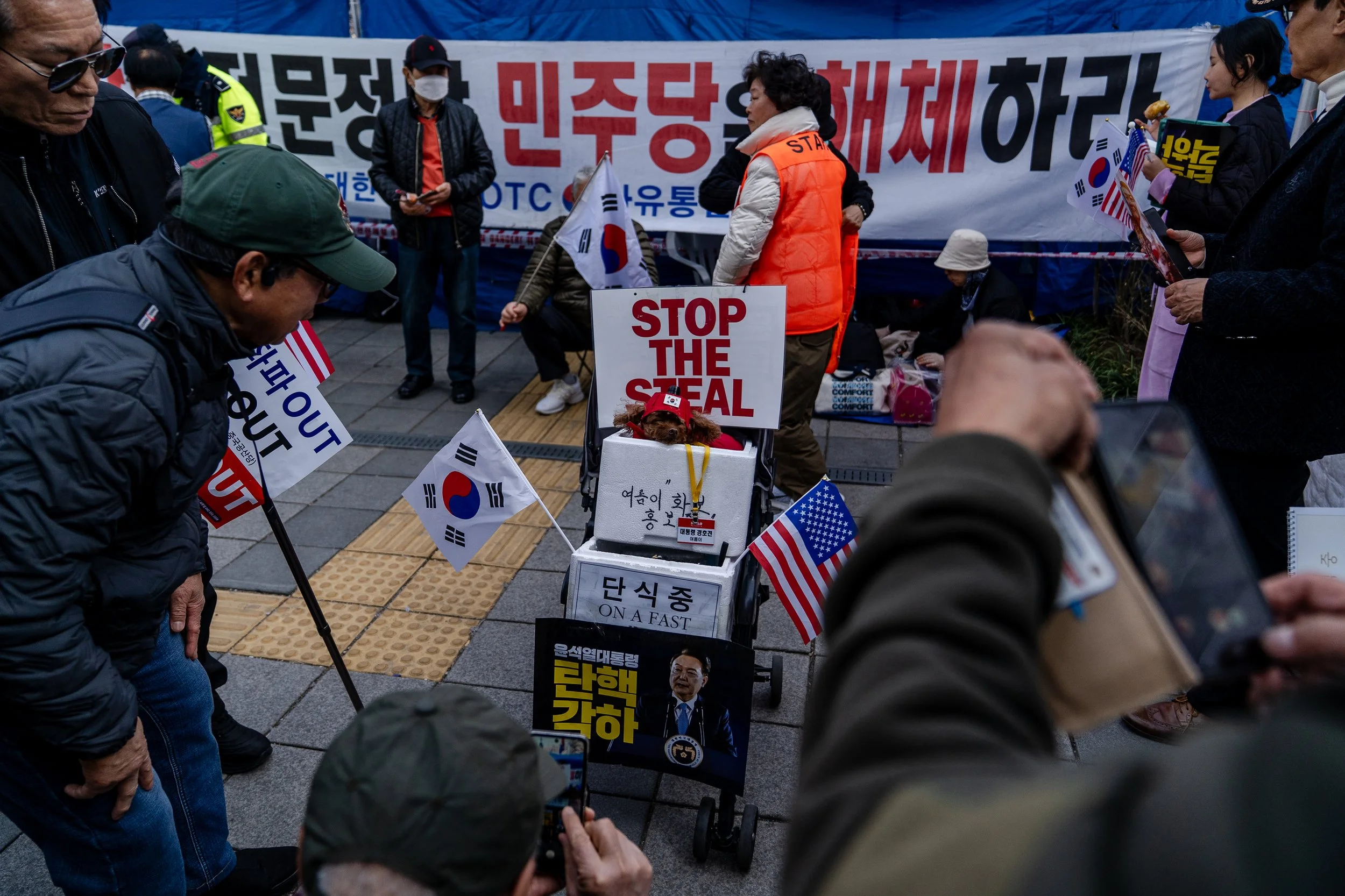
Pro-Yoon demonstrators stop to take photos of a dog dressed up as a presidential guard dog during a protest on Mar. 22.

Pro-Yoon supporter, Seong Yun-chang, holds up a calendar of his dog named Yeoreum, dressed as a presidential guard dog, at a protest on Mar. 22.
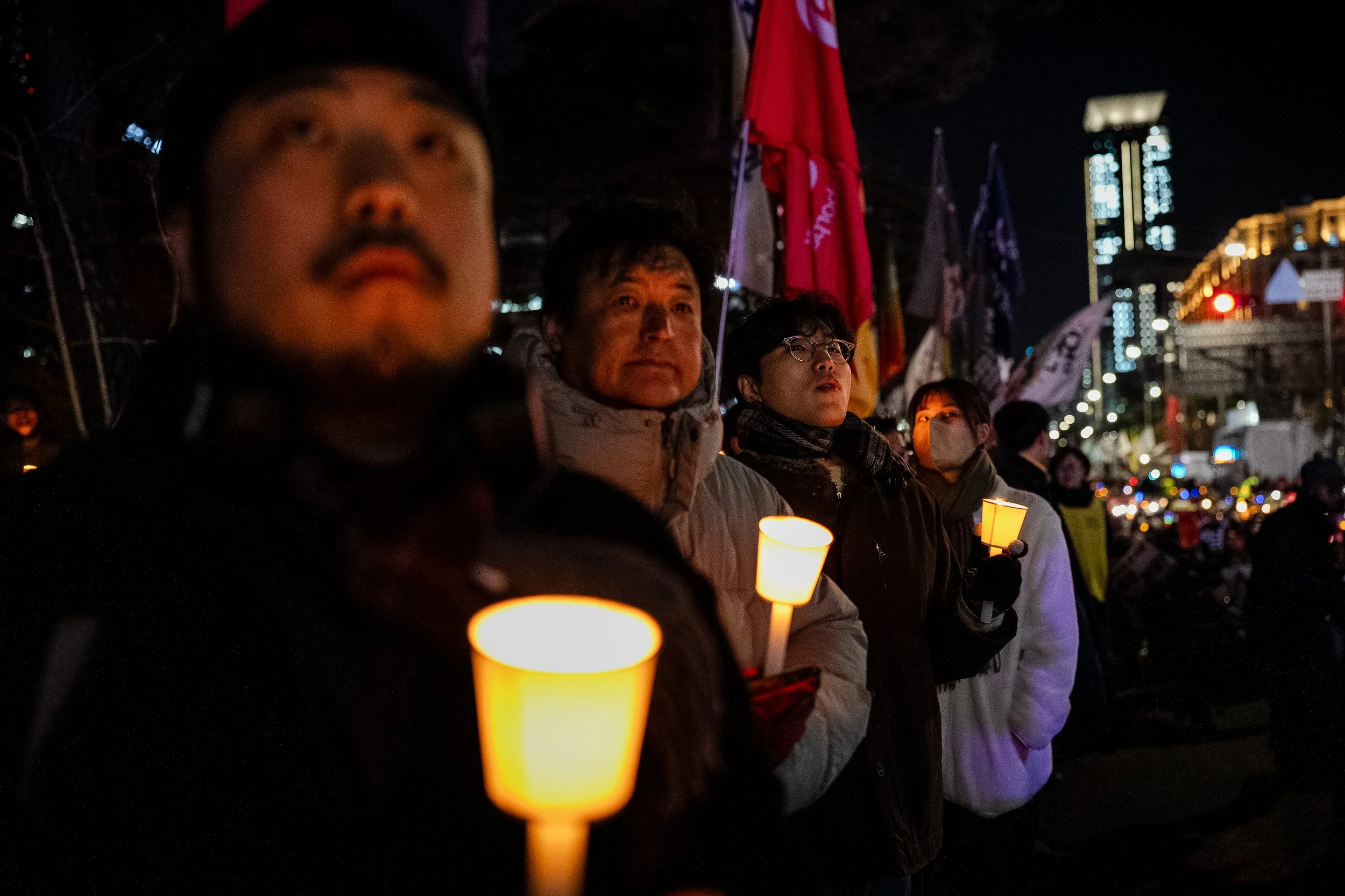
Protesters at a candlelight vigil calling for the impeachment of Yoon Suk Yeol on Dec. 6.
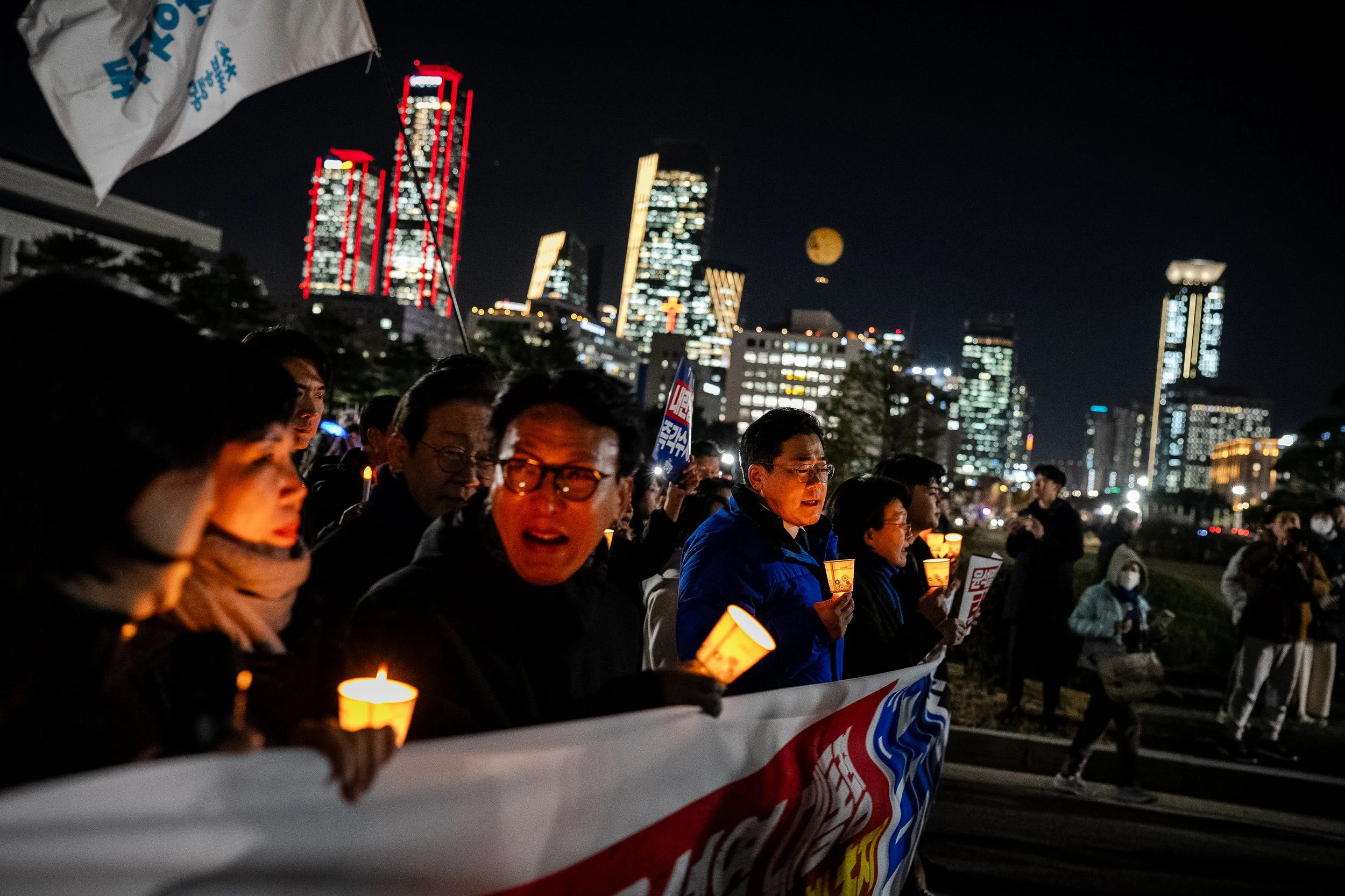
Members and supporters of the main opposition Democratic Party march during a candlelight vigil in front of the National Assembly on Dec. 4.

Pro-Yoon protesters wave South Korean and U.S. flags during a protest on Mar. 22.

People celebrate at a protest after the Constitutional Court removed Yoon Suk Yeol from power on April 4.
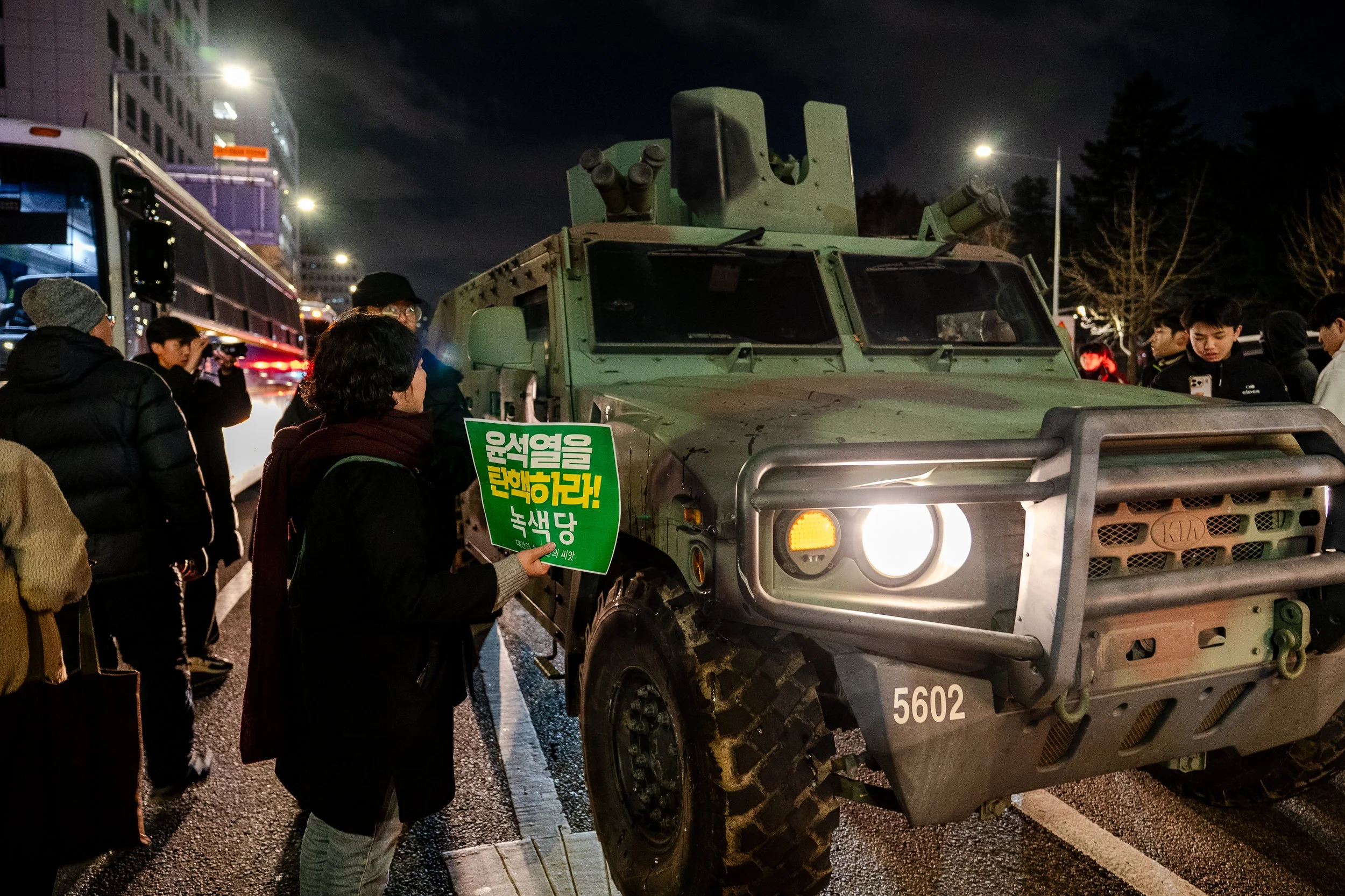
People approach a military vehicle in the streets outside the National Assembly in the early hours of the morning after martial law was declared in South Korea on Dec. 4.
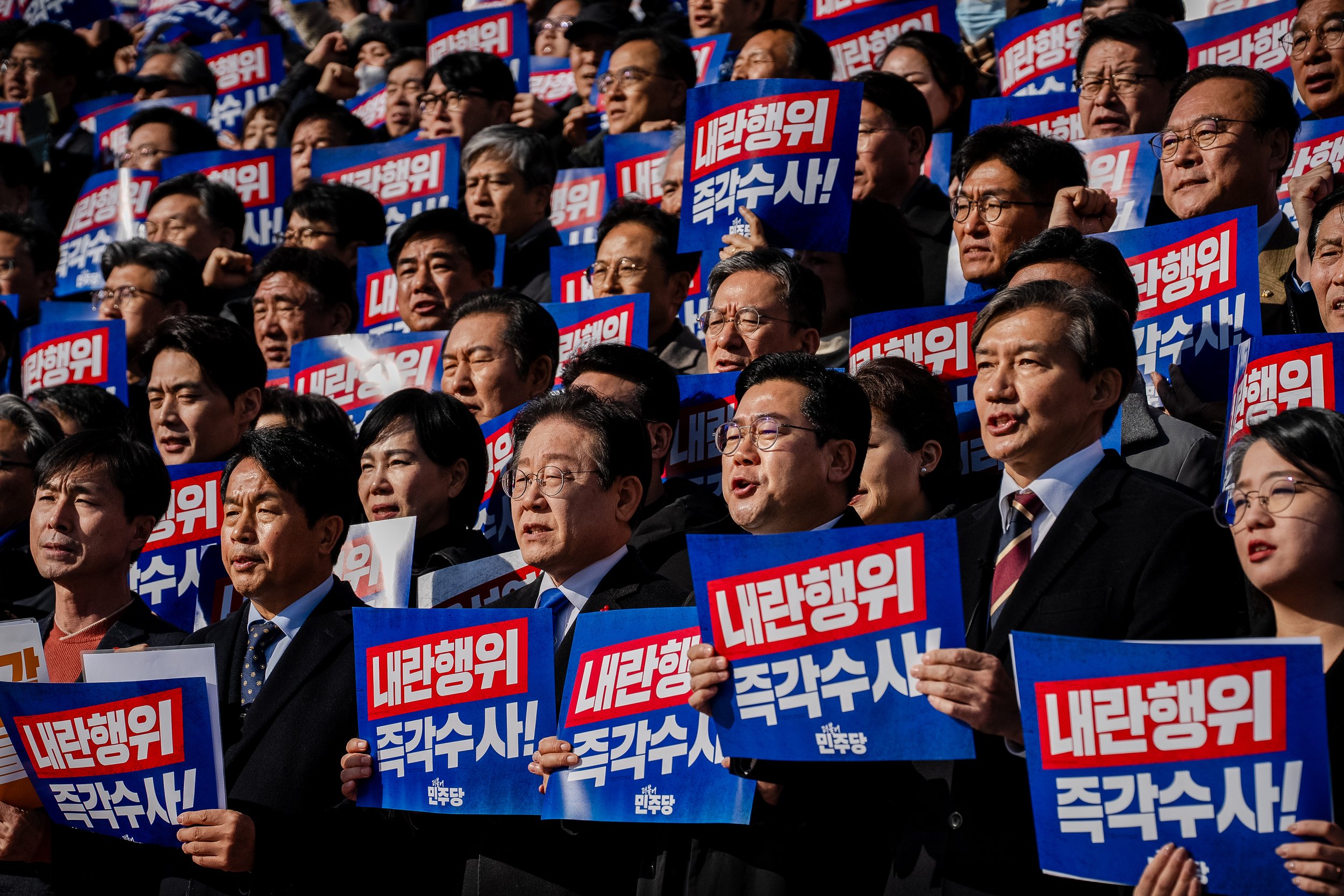
Members, supporters and supporters of the main opposition Democratic Party gather in front of the National Assembly on Dec. 4.
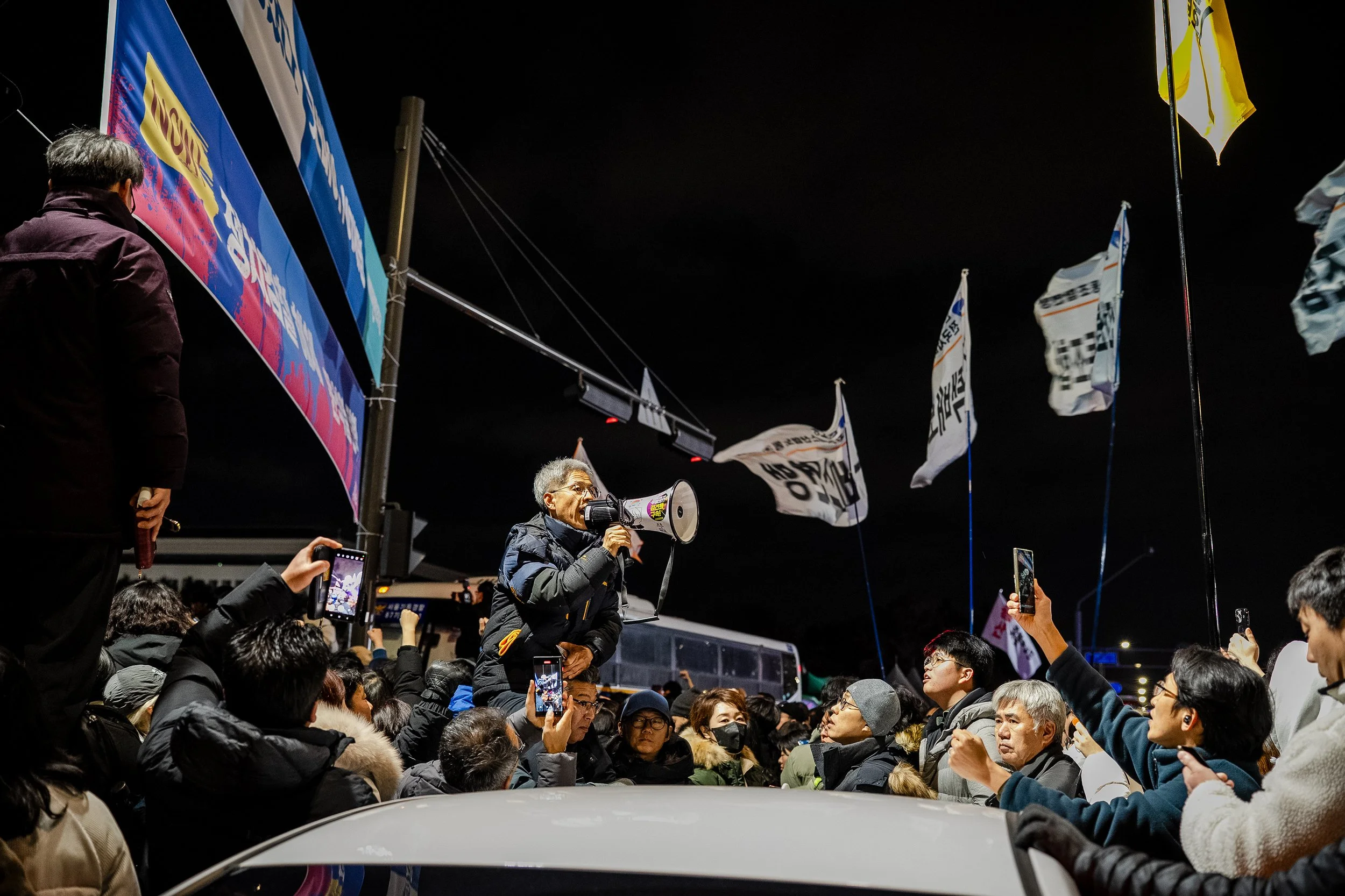
People gather to protest outside the National Assembly in the early hours of the morning after martial law was declared in South Korea on Dec. 4.

College students dance at an anti-Yoon protest before the parliamentary vote decision for Yoon Suk Yeol's impeachment on April 4.

Before seeing Yoon’s defiant apology address, “I believed impeachment was possible, but when I saw it, I thought it would rally the ruling party,” Choi Jae-yoon, 26, said. “I am anxious that he may not be impeached today, because of the ruling party.”
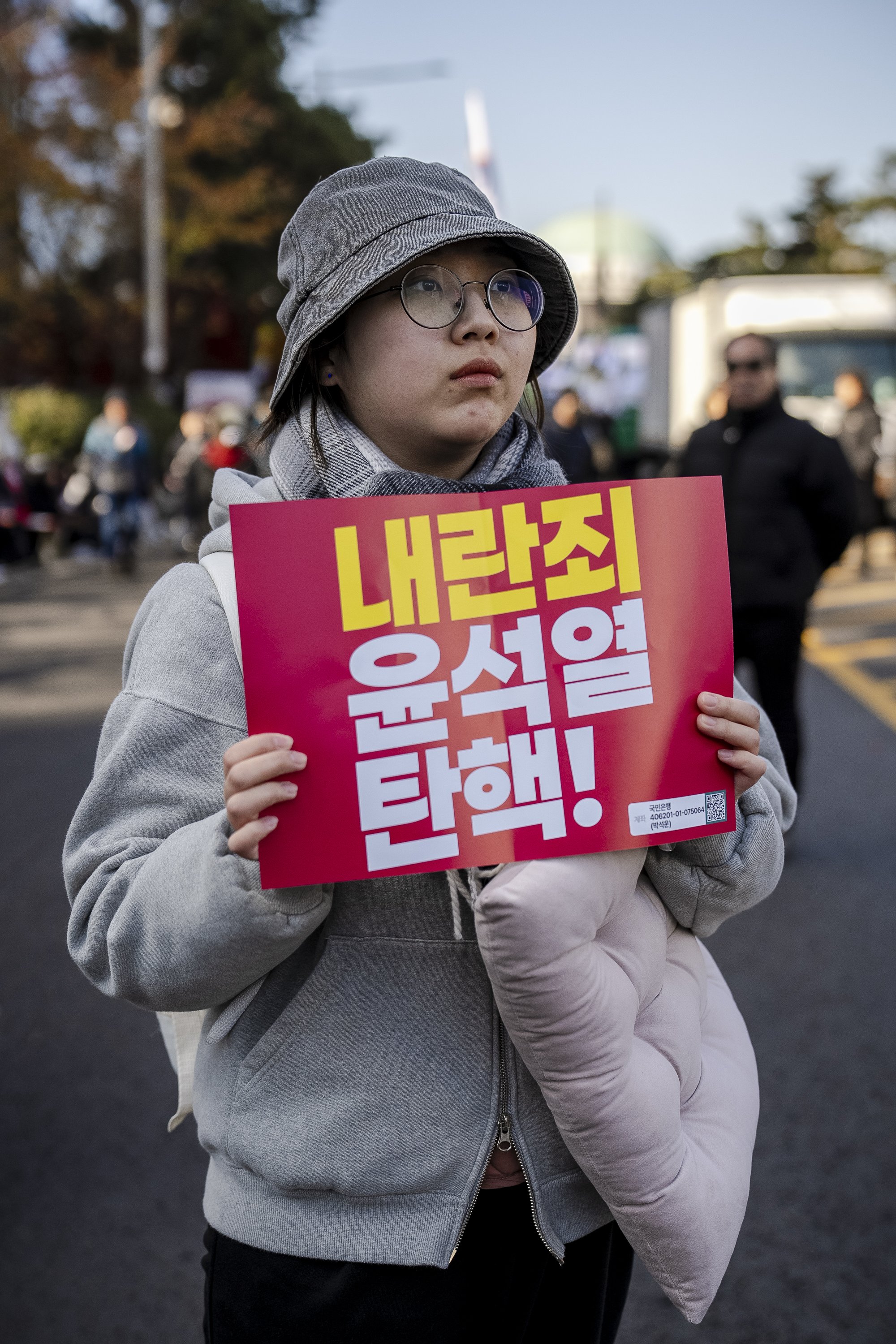
“I heard it was a good idea to bring a cushion if I’m going to be here for a while, so I brought one,” Lee Seo-hyeon, 24, from Cheonan, South Korea, said. “I will be here until the impeachment vote results come out. The impeachment vote must pass, and I believe that it will pass.”

Lee Jae-myung, leader of the opposition party, is escorted by his bodyguards during an anti-Yoon protest on Mar. 22.

Bodyguards stand on alert at a protest where Lee Jae-myung made an appearance on Mar. 22.

People call for the impeachment of President Yoon Suk Yeol at a protest outside the National Assembly leading up to the vote on Dec. 7.

Buddhist monks - with ground marks on their foreheads and wearing knee pads - protest against Yoon Suk Yeol, protrating every five steps from Jogyesa Temple to The Constitutional Court of Korea on April 2.
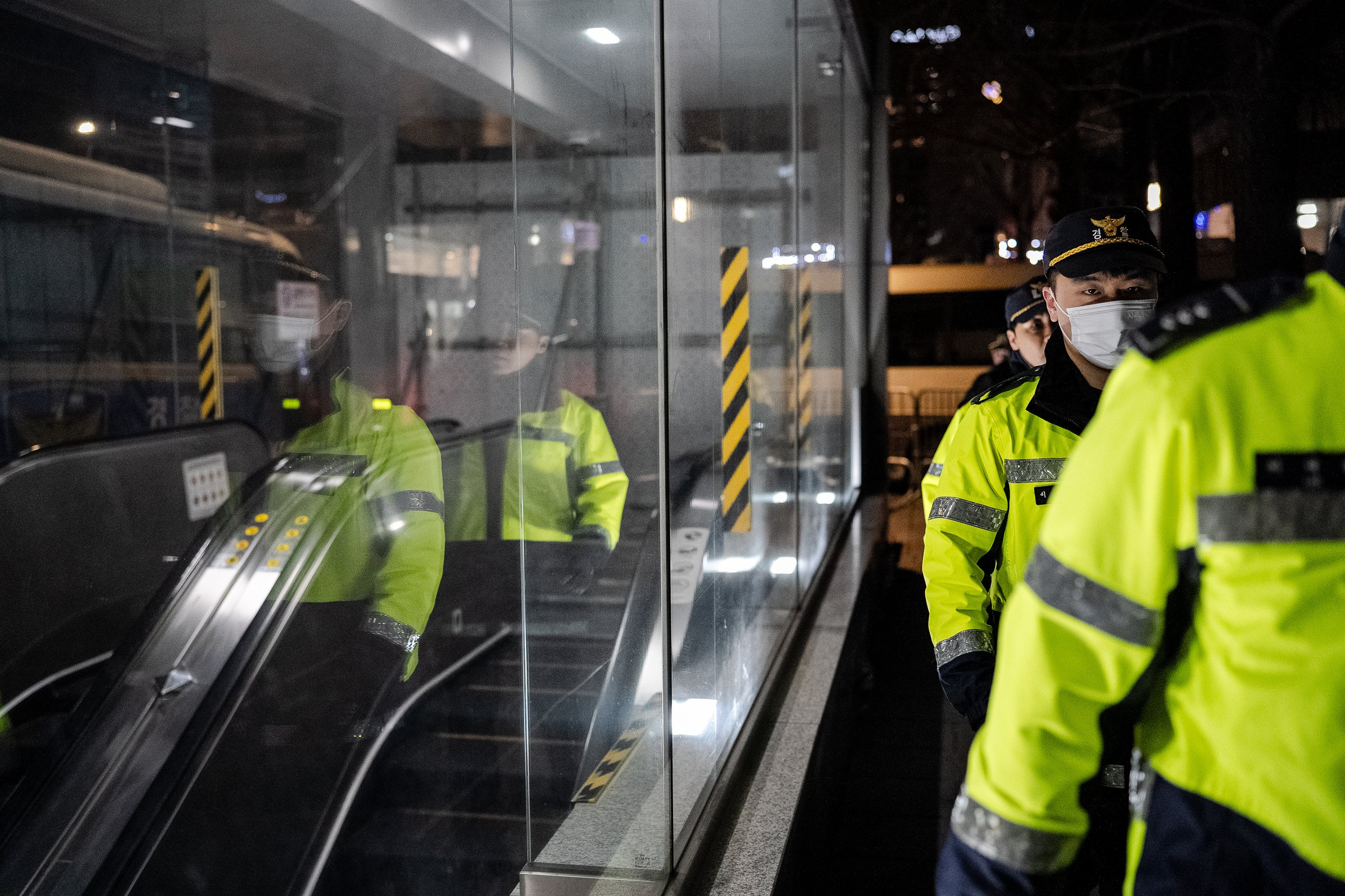
Police walk past a shut down subway station near The Constitutional Court of Korea the night before the the parliamentary vote decision for Yoon Suk Yeol's impeachment on April 3.

Police tighten security with police vans, barricades and have practice drills near The Constitutional Court of Korea on April 3.

Opposition party leader Lee Jae-myung (R) and Park Chan-dae (L), floor leader of the DPK, attend a protest on Mar. 22.

A man waves a flag at a plaza where hundreds of thousands of people walk towards a protest in front of the National Assembly against President Yoon Suk Yeol on Dec. 14.
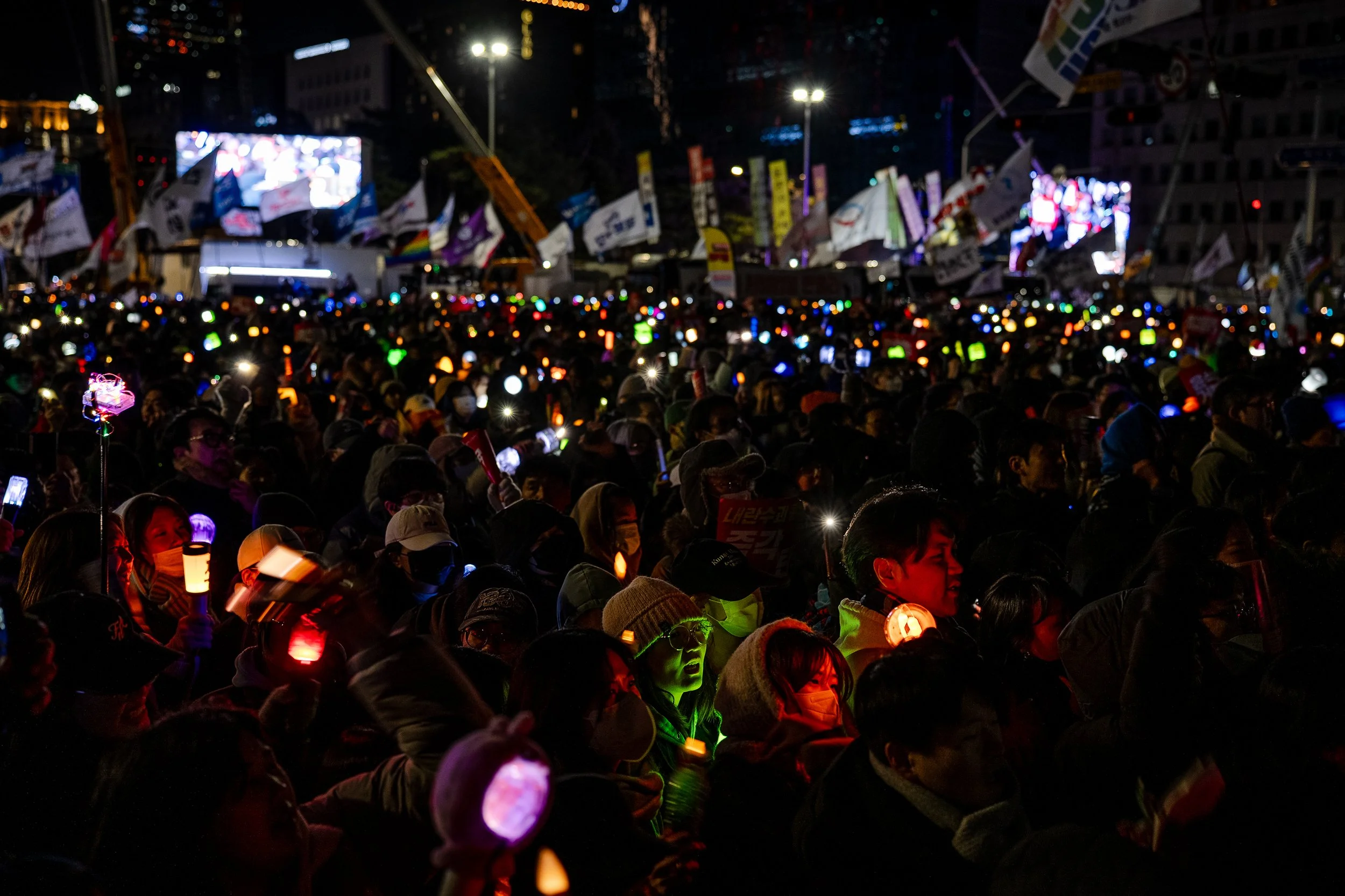
K-pop sticks light up the night as protesters approach the National Assembly during the voting proceedings in front of the National Assembly against President Yoon Suk Yeol on Dec. 7.

People wait for the outcome of the impeachment vote in front of the National Assembly on Dec. 7.

Anti-Yoon demonstrators at a protest on Mar. 22.
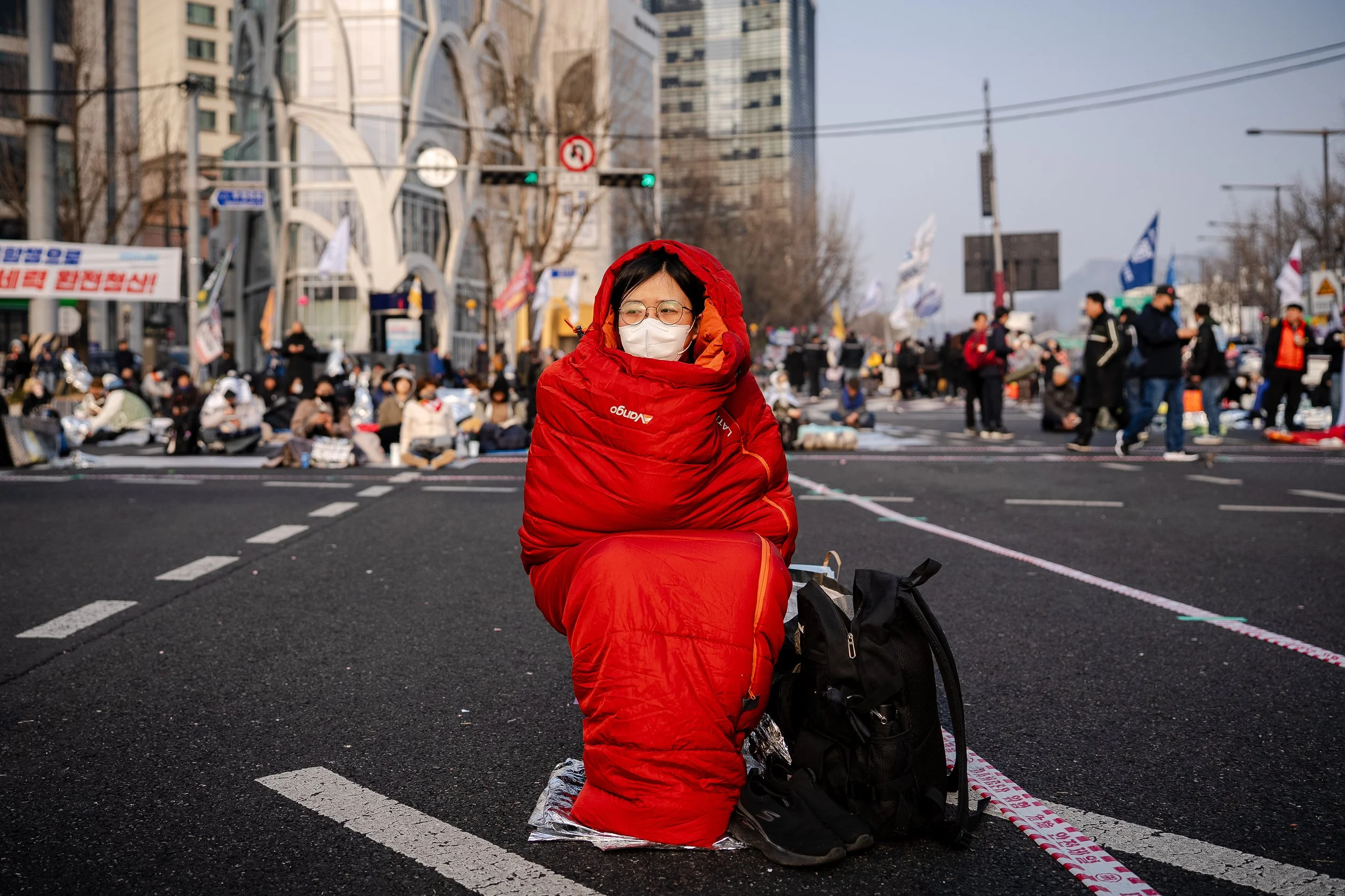
A woman huddles in her sleeping bag in the morning after she and other anti-Yoon protesters occupied the streets overnight near The Constitutional Court of Korea on April 4.
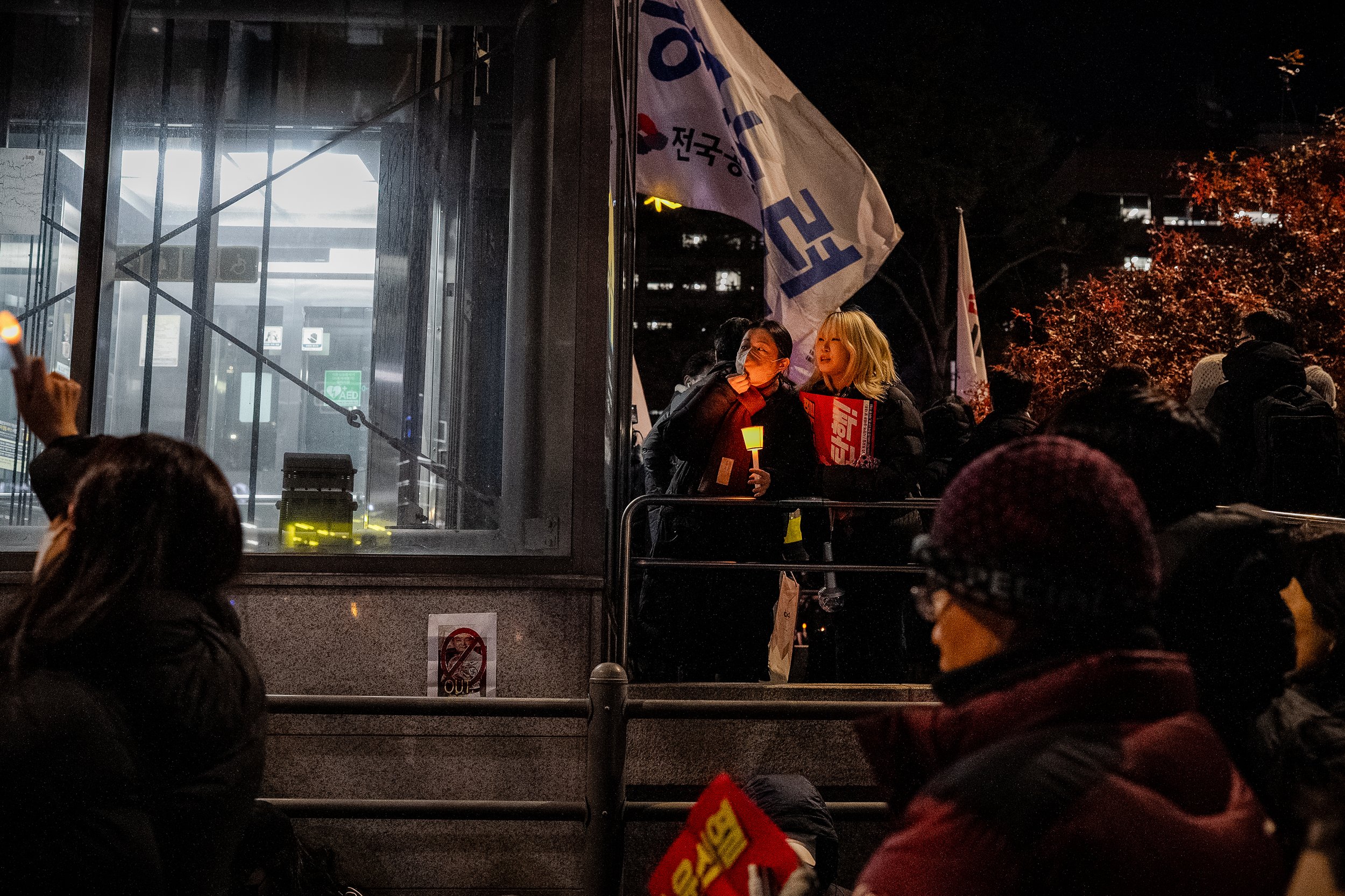
Two girls look toward a candlelight vigil calling for the impeachment of Yoon Suk Yeol on Dec. 6.

People celebrate at a protest after the Constitutional Court removed Yoon Suk Yeol from power on April 4.

People drum and dance at a protest in front of the National Assembly against President Yoon Suk Yeol on Dec. 14.

Protesters at a candlelight vigil calling for the impeachment of Yoon Suk Yeol on Dec. 6.

People set up tents at an anti-Yoon protest near The Constitutional Court of Korea the night before the parliamentary vote decision on April 3.

People play instruments in the morning after occupying the streets overnight near The Constitutional Court of Korea on April 4.

A woman reads a book in the morning after camping out overnight near The Constitutional Court of Korea on April 4.

The Constitutional Court of Korea is reflected in a window as police tighten security with police vans, barricades and practice drills the night before the parliamentary vote decision for Yoon Suk Yeol's impeachment on April 3.

A man takes a photo of a police bus window broken by a Yoon supporter after the Constitutional Court removed Yoon Suk Yeol from power in Seoul

A man holds up a flag of Yoon Suk Yeol at a pro-Yoon protest on Mar. 22.

Anti-Yoon demonstrators rest upstairs in a building and look outside at the protest on Mar. 22.
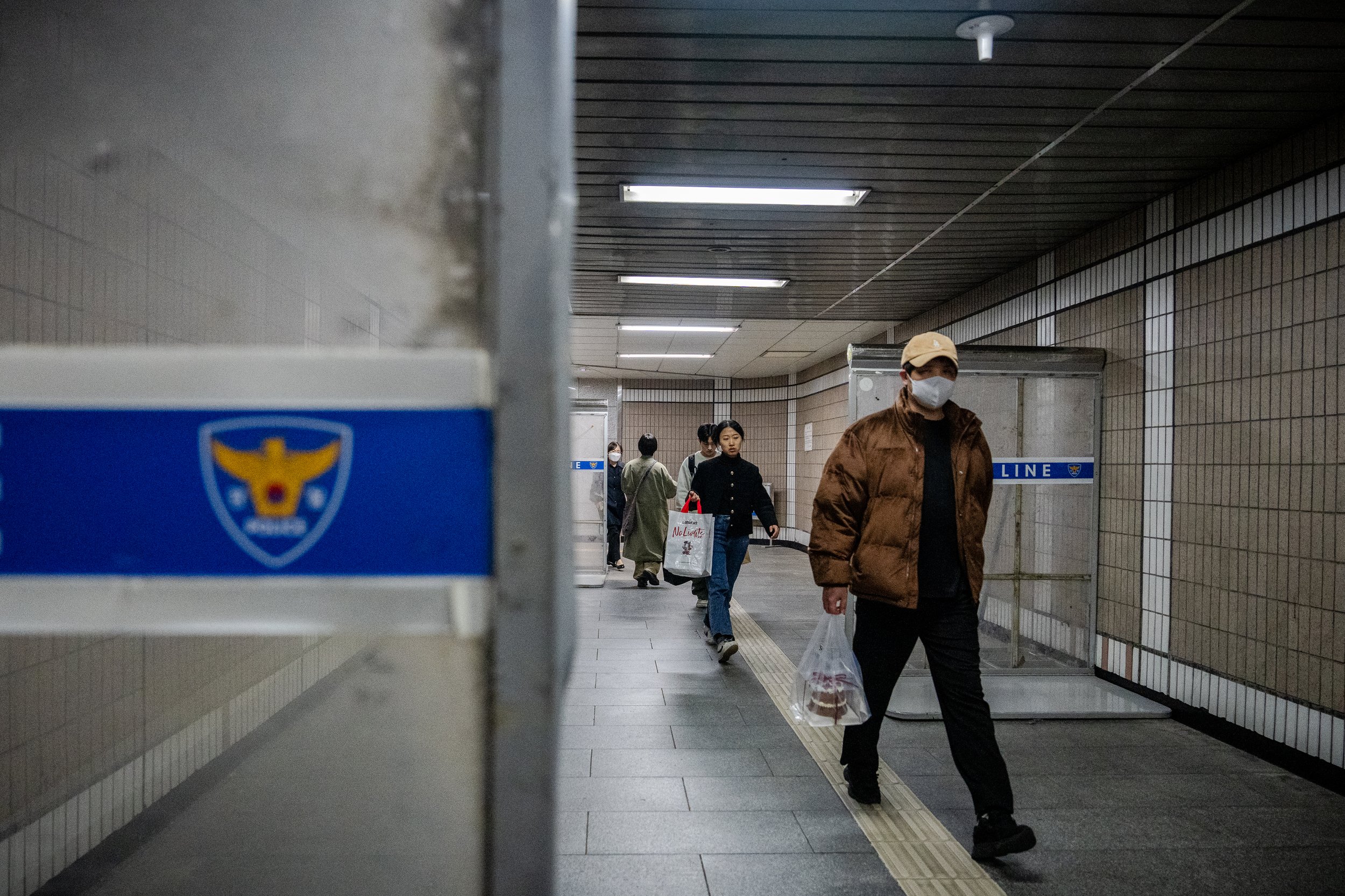
People walk past police barricades set up at Anguk Station as security is tightened ahead of the parliamentary vote for Yoon Suk Yeol's impeachment on April 1.
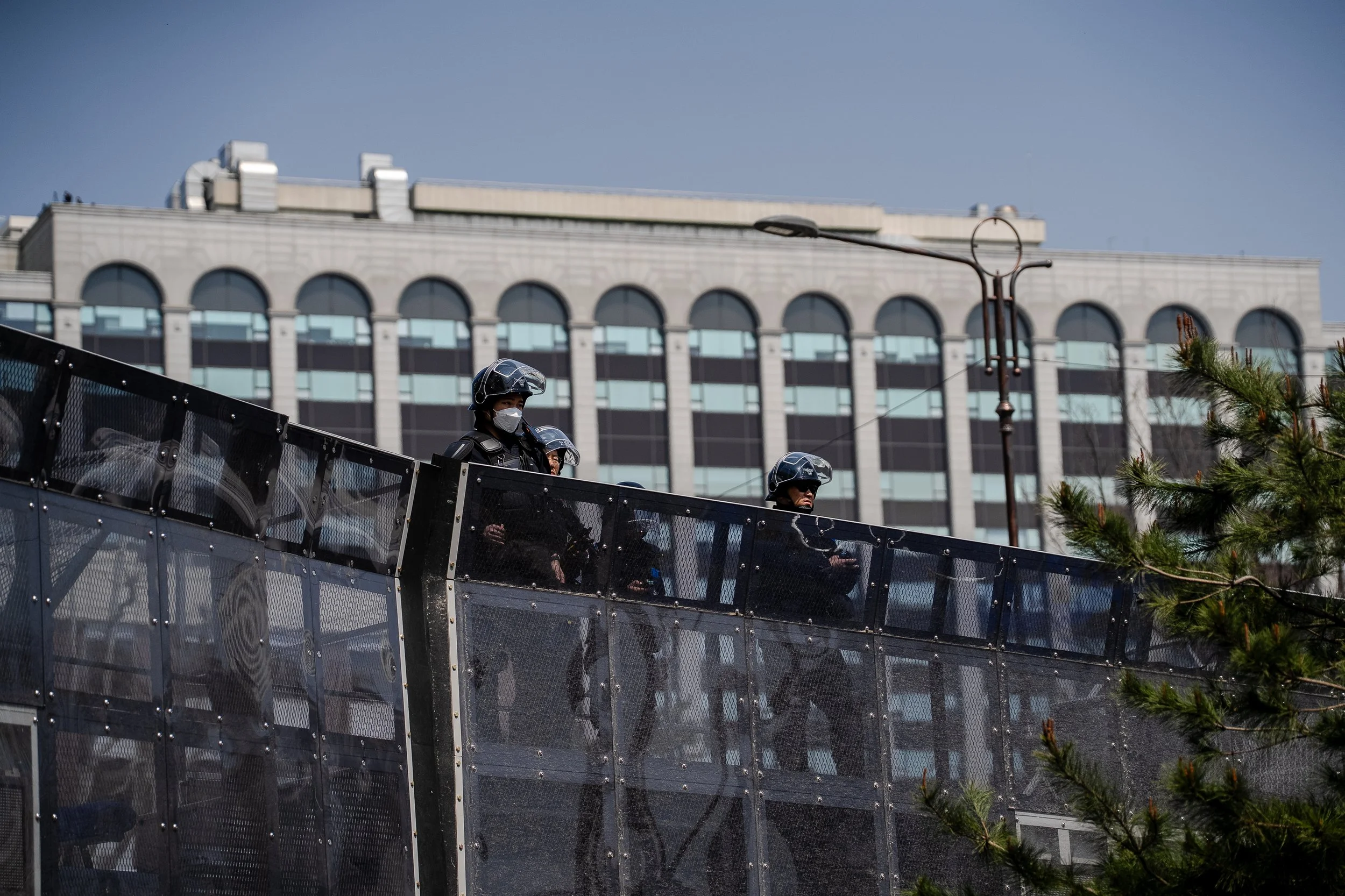
Police stand on guard atop a police vehicle with an erected wall near the Constitutional Court in Seoul on April 4.

A woman wears signs that say "Arrest Yoon Suk Yeol!" on her jeans at a protest in front of the National Assembly on Dec. 14.

Pro-Yoon protesters pray and sing at a protest on Mar. 22.

People gather in protest in front of the National Assembly on Dec. 14.

People give out free food and drinks at a protest in front of the National Assembly against President Yoon Suk Yeol on Dec. 14.

A man waves the South Korean and U.S. flag at a pro-Yoon protest on Mar. 22.
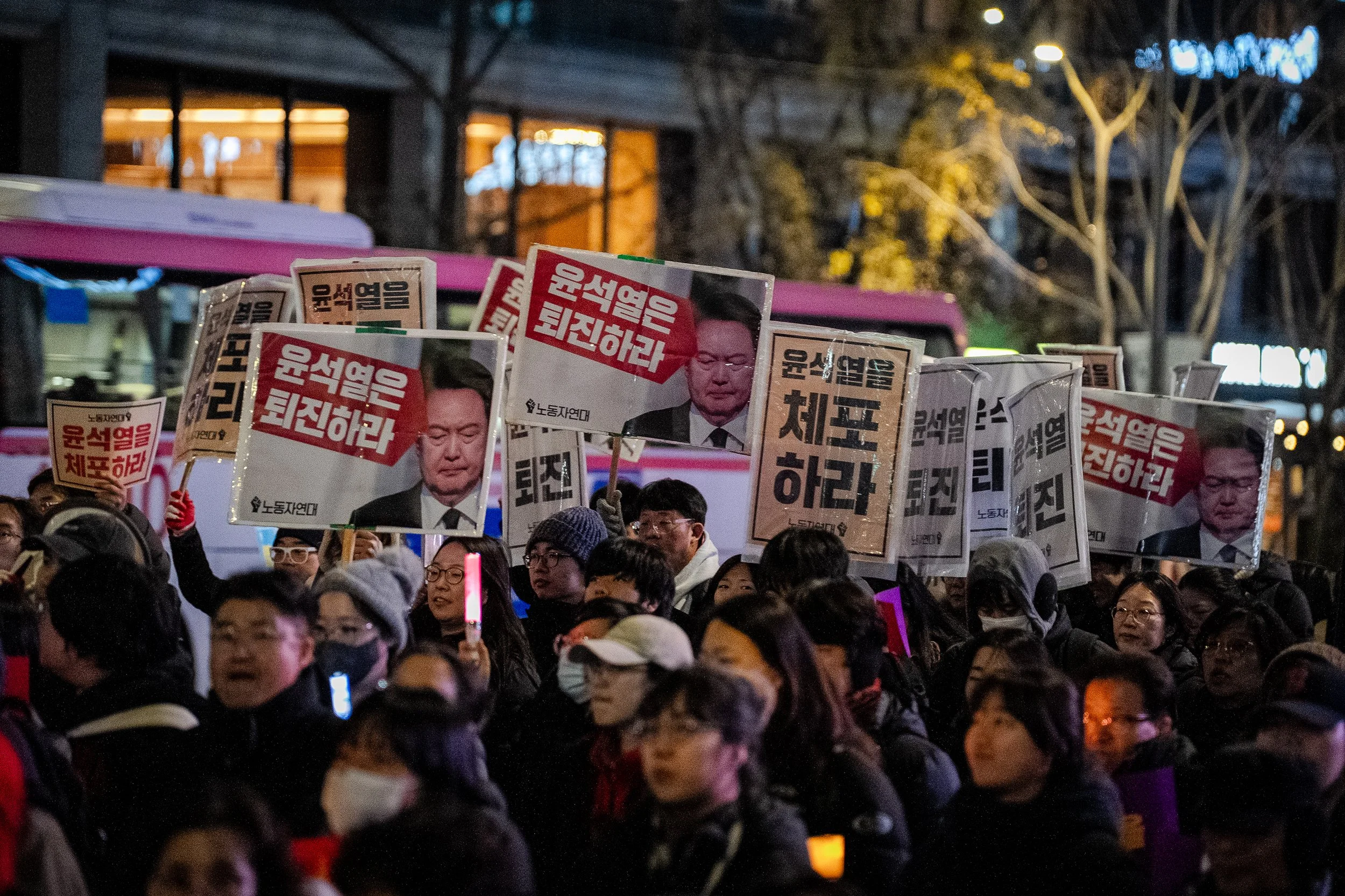
Protesters take to the streets calling for Yoon Suk Yeol to step down on Dec. 4.
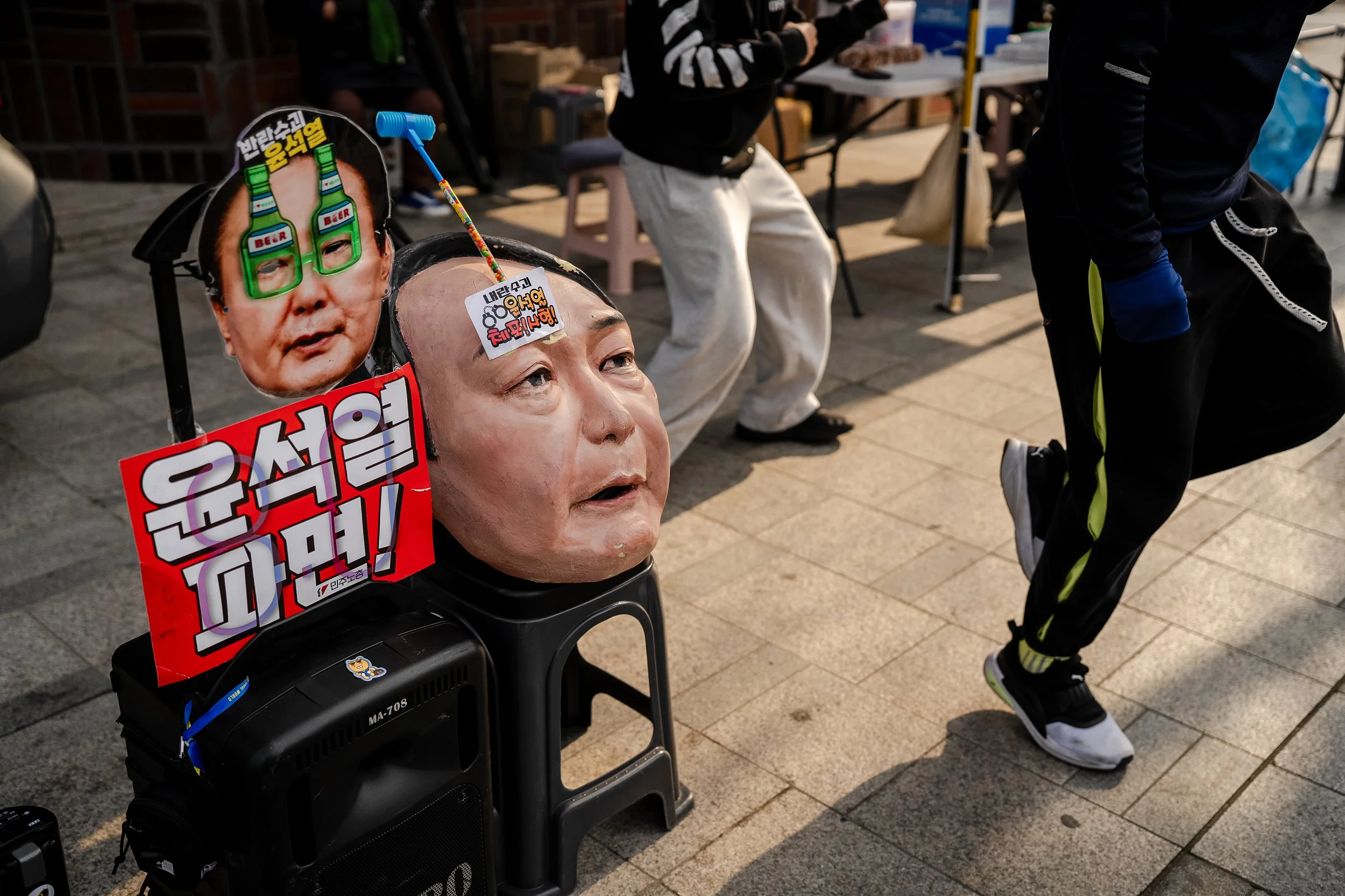
Protesters dance near a mask in Yoon Suk Yeol's likeliness at an anti-Yoon protest on April 4.

A person puts up a banner displaying caricatures of Yoon Sul Yeol in protest in front of the National Assembly on Dec. 14.

Pro-Yoon protesters show face at a protest in front of the National Assembly on Dec. 7.

People walk by tents set up by protesters who camped out overnight near The Constitutional Court of Korea on April 4.

People celebrate and take selfies during a protest in front of the National Assembly after President Yoon Suk Yeol was impeached on Dec. 14.
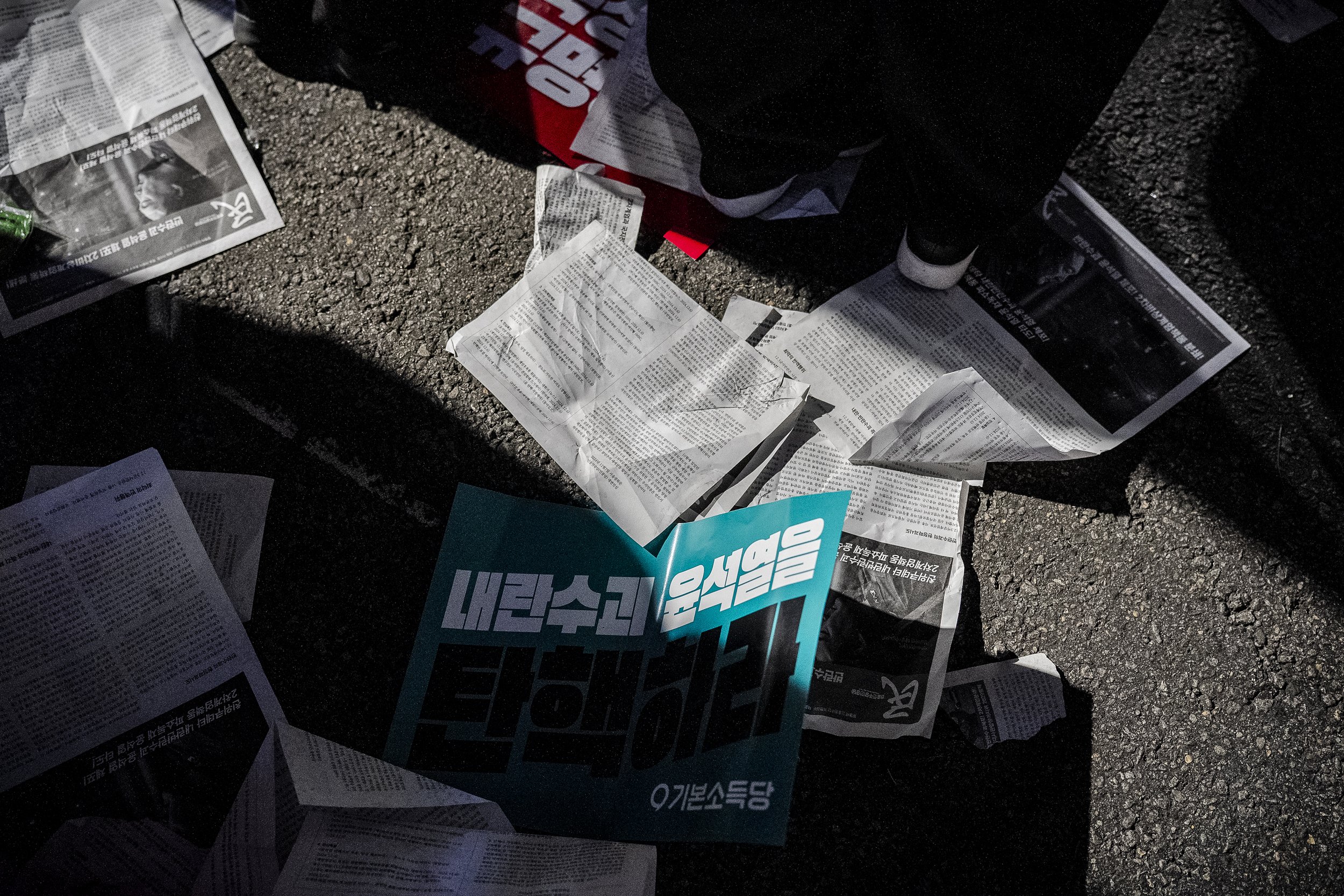
Signs and flyers litter the ground at a protest in front of the National Assembly against President Yoon Suk Yeol on Dec. 7.

A commuter watches the news on his mobile phone the morning after South Korean President Yoon Suk Yeol declared martial law on Dec. 4.

People celebrate after President Yoon Suk Yeol was impeached on Dec. 14.